
Innovate for Sustainable Energy, Secure a Shared Future for Humanity
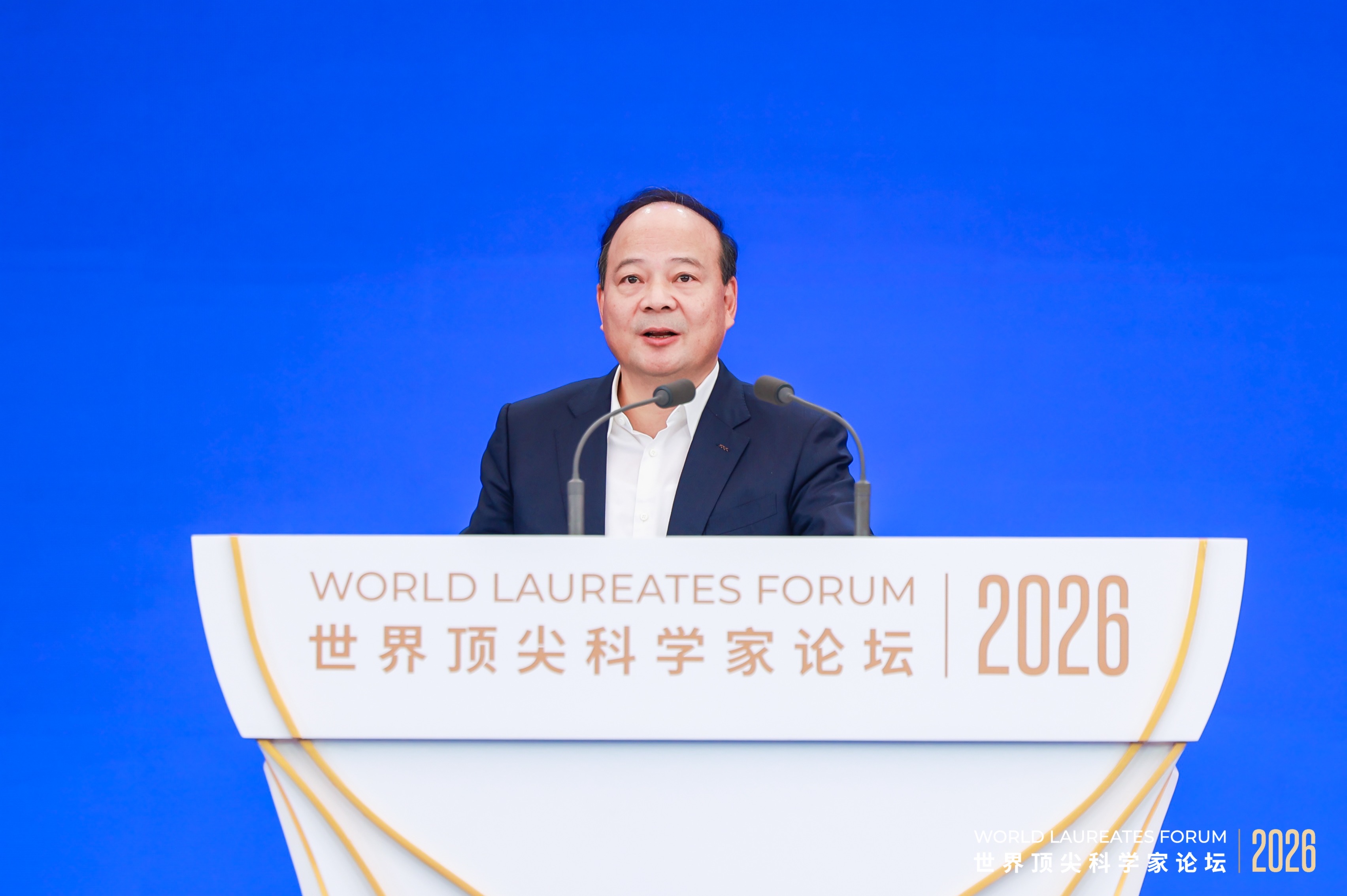
SHANGHAI, Oct. 31, 2026 — The battery industry needs to accelerate scientific discovery and technological innovation through closer collaboration with the scientific community and the power of AI, said Dr. Robin Zeng, Chairman and CEO of CATL, at the 2026 World Laureates Forum held at Shanghai Lingang Center.
Dr. Zeng emphasized that a sustainable future for humanity relies heavily on sustainable energy, where battery technology plays a pivotal role. Founded with mission to drive technological innovation and contribute to global energy transition, CATL has focused on translating scientific discoveries into technologies, products and commercial applications, delivering comprehensive solutions for energy generation and application.
After shipping 661 GWh last year, CATL expects to exceed 1,000 GWh (1 terawatt-hour) this year, ushering in what Dr. Zeng described as the "TWh era" for the company. At this massive scale, technical demands are higher than ever. Innovation remains the core engine of CATL's growth, backed by more than 60,000 patents and extensive proprietary know-how.
Even so, the battery technology still falls short. For instance, energy density remains insufficient for passenger aircraft and other demanding applications. One fundamental challenge is the extraordinary complexity of battery research, spanning time scales from femtoseconds to a 25-year service life, and spatial scales ranging from individual atoms to systems measuring tens or hundreds of meters.
To address this complexity, CATL is using large models to drive R&D. Drawing on 600 TB of data and more than one trillion testing data points, it is building an AI-native research system featuring a closed-loop integration of virtual (dry) and physical (wet) experimentation. The system has enabled CATL to screen more than 1,600 compounds and identify seven promising candidate materials in a short time.
Dr. Zeng called on scientists to work more closely with the battery industry to push the boundaries of innovation. He emphasized the need to uncover more scientific facts, and build advanced scientific models in physics, chemistry and electrochemistry that go beyond today's AI models.
In closing, Zeng said progress in sustainable energy depends on an environment that respects innovation, encourage technology licensing, protect patents and know-hows. He called on entrepreneurs and technology leaders to work together in building such a collaborative ecosystem.
By clicking on the button “I accept” or by further usage of this website you express consent with usage of cookies as well as you grant us the permission to collect and process personal data about your activity on this website. Such information are used to determine personalised content and display of the relevant advertisement on social networks and other websites. More information about personal data processing can be found on this link. Read More