
What Can 3,300 Pure Electric Buses Do for the Urban Power Grid?
A pure electric bus is typically equipped with a large battery of 150–300 kWh. It is not only a transportation vehicle but can also serve as a high-density mobile energy storage unit within a modern power system.
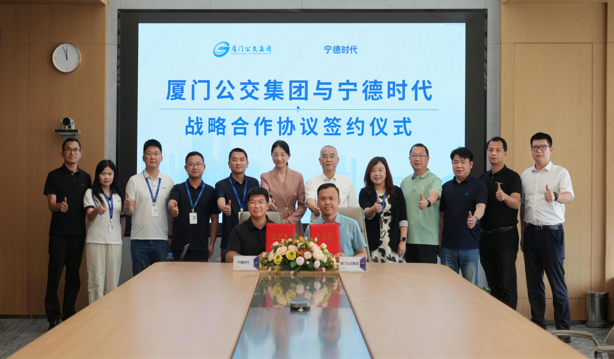
On June 12, CATL signed a strategic cooperation agreement with Xiamen Public Transport Group. The partnership will focus on areas such as vehicle aftermarket services, battery swap network construction, and vehicle-to-grid (V2G) applications, supporting Xiamen's carbon peaking and carbon neutrality goals.
1.Vehicle-to-Grid (V2G): From One-Way Electricity Consumption to Two-Way Balancing
CATL will advance the employment of V2G technology, which enables bidirectional energy flow between buses and the power grid by increasing the discharge power of their batteries.
Off-Peak Charging: Buses are charged in the early morning when the grid load is low and the electricity price is low.
Peak-Hour Discharging: Buses at transit hubs feed stored electricity back into the grid at noon or in the evening when the city has a peak demand for electricity.
For instance, if 1,000 buses discharge electricity simultaneously during peak demand hours, it is equivalent to a virtual power plant with a capacity of several hundred megawatts supplying power to the city. This not only relieves peak electricity demand but may also bring tangible revenue from electricity price arbitrage to transport companies.
2. Aftermarket Services: Full Lifecycle Management
Through NING Service and its authorized service stations, CATL has introduced a fault early warning system for vehicles that continuously monitors the health status of every battery, ensuring safety throughout the battery's full lifecycle, reducing high third-party maintenance costs, and increasing maintenance efficiency by more than 30%. The aftermarket services will address key operational challenges in maintenance, safety, cost, and asset management, which will support the efficient, safe, and cost-efficient operation of 95% of Xiamen's electrified bus fleet.
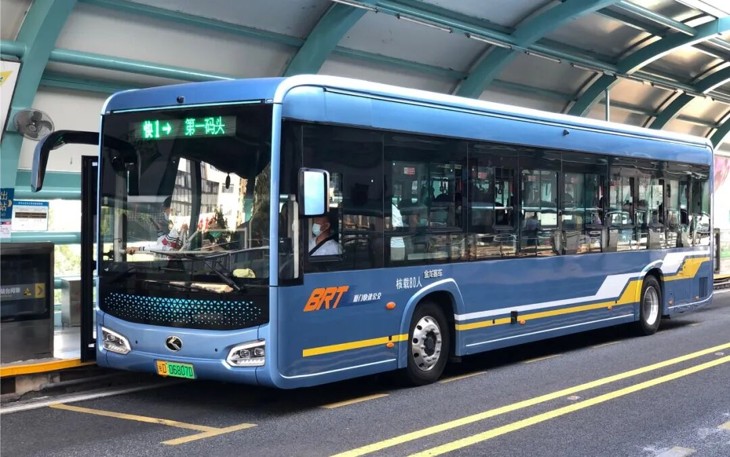
3. Passenger Vehicle Battery Swap Network: Resource Integration to Improve Resource Utilization at Bus Depots
CATL will take full advantage of the resources of Xiamen's bus depots to establish "Choco-Swap stations" across the city. Xiamen Public Transport Group will provide venue, electricity, and operation & management support, while CATL will provide battery swap equipment, standard batteries, a cloud platform, and maintenance technology. In the future, users will complete battery swapping in just 3–5 minutes to significantly improve the energy replenishment efficiency.
CATL is committed to maximizing the economic and social benefits of every kilowatt-hour of electricity. Currently, CATL has established strategic partnerships with public transport groups in multiple cities, including Fuzhou, Nanjing, Guangzhou, and Chengdu. As thousands of pure electric buses, sanitation trucks, and logistics vehicles become connected through the integrated battery swap and V2G network, they will form a large-scale, highly responsive distributed mobile energy storage network, providing critical support for grid stability and the development of China's new-type power system.
By clicking on the button “I accept” or by further usage of this website you express consent with usage of cookies as well as you grant us the permission to collect and process personal data about your activity on this website. Such information are used to determine personalised content and display of the relevant advertisement on social networks and other websites. More information about personal data processing can be found on this link. Read More